Oh, The Places You'll Go
Yasmin Chilmeran explores what it means to be an immigrant to New Zealand and to not know, precisely, where home is.
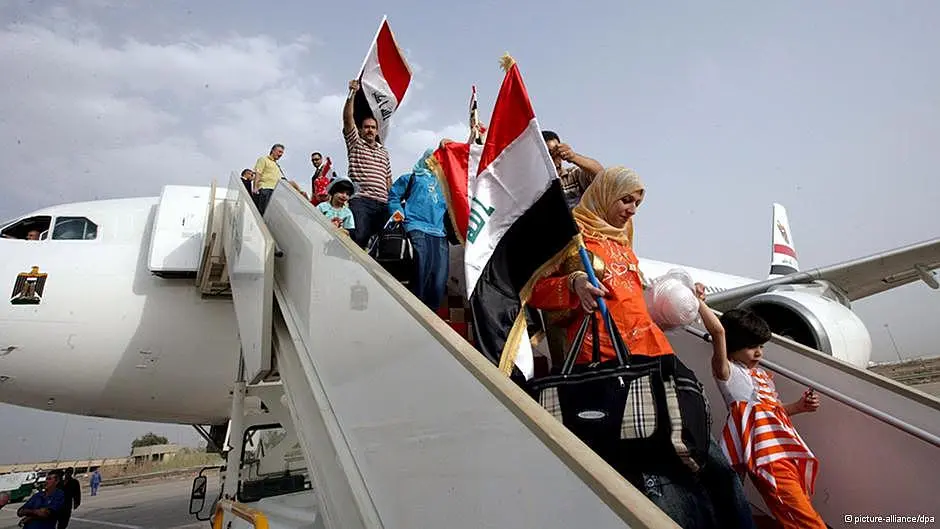
My life starts when we wanted to travel to New Zealand. We will travel today, 28/05/1996. I am 8 years old. I love travelling. We will take the plane. I love taking the plane. It is 10 in the evening. How happy I am.
Right before I travelled to South Korea for my OE, my dad gave me a piece of paper on which I’d written the short diary entry, above, the night we left Jordan and the Middle East for our new home.
I have a lot of trouble explaining who I am. I was born in Baghdad right before the first Gulf War. I moved to New Zealand from Iraq at the age of eight; until eighteen I really disliked being an immigrant. It’s only recently I’ve started wearing that identity proudly.
When I think about leaving Iraq all I remember is not being told exactly where we were going — and having a strange sense of finality about it regardless. I think I cried because I wanted to see my best friend. I think I was excited to see my dad who had been in Jordan for what felt like forever. I think I knew I wasn’t going to be going back any time soon.
During the war, my parents did what everyone else did, which was to get on with their lives against a backdrop of stifling fear for our young family. Very few people understand this, and I’m angry about that. For people in the West, wars are distant things. When they stop being distant, it’s because someone from the armed forced lost his or her life, or a white person in Hollywood decided to make a film about someone in armed forces losing his or her life (Argo, The Hurt Locker, Homeland).
Being Iraqi, being from a conflict zone, being Arab, it all means something different to me.
Trans: I'm a free woman
It means carrying anxiety I don’t entirely understand, like feeling unbearably nervous around immigration officials. I don’t understand why I had a panic attack in Cairo last year, after seeing a sketchy guy at our hotel while we were interviewing activists and being convinced that he was listening and recording our conversation. He might have been. I don’t know. I do know that my ragged breath, uncontrollable shaking and the insistence my companion check the corridor multiple times to make sure he wasn’t coming for me isn’t normal. I set my iPad to delete all data if someone tried to login unsuccessfully, because my body reverted to an eight year old’s knowledge that having political ideas means trouble. I’m embarrassed by that fact.
It means moving a lot and having a vague identity. It means a complicated family history I’m learning about little by little. Six months in Aqaba, some time on oil tankers in the Mediterranean, a few more months in Amman, a night in Malaysia and — by some miracle — New Zealand citizenship. I had a Green Card for a while. A year in South Korea. Now I live in Australia. Family in Baghdad, in Sulaymaniyah, in Dallas, in Dubai, Amman, Abu Dhabi, Toronto, Berlin, London.
It means very little access to extended family. A slight depressed feeling over the Christmas holidays, when my friends would complain about seeing their cousins at their grandparent’s house while I looked forward to awkward days with my immediate family and my parents’ dwindling marriage.
It means a tiny security net. My parents were both 37 when we made it to Auckland to begin again; for baby boomers, that’s a late start. It means my mum will still be paying her mortgage when she’s 75. It means that despite the fact that my parents are qualified, trained and experienced electrical engineers, finding work was exceptionally hard and we needed help for a long time.
It means guilt and fear over potentially not seeing my grandparents again. It’s something I have to learn to accept, because this is normal for someone who moved from a conflict zone to a country on the other side of the globe. I might not learn important lessons from them, or hear my granddad talk about his time as a socialist in Iraq, or how he spent time in detention as a result of it, or how my grandmother fared with her children during that period in their lives. I miss other simple lessons; cooking certain dishes; hearing about what they do in their spare time; where they go for walks; what marriage is like after such a long time together. I miss knowing what it’s like to be around people older than 55.
In South Korea, where I taught English for a year in a funny pan-Pacific accent that now belongs to me but didn’t then, I became ‘Asian’. My co-teacher told the kids this once, after they asked why I was more pleasant than the other American teacher at our school. My Middle-Eastern-ness became Asian and I was a little bit less ‘other’ than the other Westerners.
Most recently, I started a master’s thesis on women’s organisations, and their relationships with international norms like UN resolutions or international agreements. I chose to study the Middle East because I wanted a reason to look closer at what being a woman means in that part of the world; to tackle it as a Westerner and a native informer at the same time. This July, I returned from a two-month field trip in Jordan, where I interviewed staff at women’s organisations about what they do and how they work in a culture that places its anti-colonialism ahead of its own interests, but only if they relate to women’s rights. For the first time in a long time my New Zealand passport didn’t matter, and I became Iraqi again. My Iraqi dialect was detected immediately, and I was mostly treated with a warm welcome by people who I don’t think understand what being Iraqi means.
*
This is a lot of back-story. That’s kind of my point. Immigrants and asylum seekers and refugees come with back-stories. They come with complex issues. In the midst of election season in Australia, this is lost on so many people. We have to remember to give immigrants time and space to have back stories and history and points of origin and to understand their otherness in relation to my own and our own. We don’t do that enough. I don’t even know what I mean when I say ‘we’. I think I’m talking to New Zealand, my sort-of homeland that keeps disappointing me in some ways and impressing me in others. Should I be grateful that Jim Bolger’s policy didn’t leave my family to rot in our pretty apartment in Baghdad, with our nice new furniture and Saddam Hussein’s image on the inside cover of all of my school books? Do all immigrants need to be grateful that we were taken in? Does the points system mean we’re less obligated to be grateful than a refugee? Or can I become so integrated, take on so much whiteness that I need not be grateful for anything because I was born and have the right to exist and argue and get angry and demand to be heard?
In Jordan I learnt the hard lesson that once you leave your homeland, you lose ability to act out. You always have to be grateful. I was reminded I will always be an ‘other’. There was an incident with Iraqi officials and Jordanian members of the Ba’athist party (Saddam Hussein’s party). The Iraqi embassy held an event commemorating mass graves found post invasion. A few Ba’athists, allegedly including Saddam Hussein’s lawyer, crashed the event, loudly chanting pro-Saddam chants. They were violently attacked and a video of the fight went viral, resulting in a few awkward weeks for Iraqis in Jordan and a number of conversations with anyone picking up the dialect about how guests ought to be well-behaved in someone else’s country. The RAs of the apartment building I was staying in advised me to use as little Arabic as possible to avoid any extra harassment.
Despite being Arab in the Middle East, so achingly close to the land I’m supposed to have a right to live in, I was a guest and I had to be on my best behaviour. If anyone else acted out, I was held responsible. Being a guest came before our right to display our pain or mourn the loss of thousands of lives or be angry about dictatorship.
The strange sway between negative and positive understandings of immigrant presence is very present in New Zealand, as it was in Jordan. The majority of New Zealand’s immigrants walk one of two routes. You can either be a Good Immigrant or a Bad Immigrant, and there’s a class of New Zealander associated with each of those readings. Good Immigrants attract Nice New Zealanders who like multiculturalism and know how to use chopsticks. A Good Immigrant learns English and fields fun questions like ‘where are you from originally?’, ‘how did you learn English so well?’, and ‘tell me about your culture’.
On the other end of the spectrum, we have Bad Immigrants and New Zealanders who read them that way. Bad Immigrants don’t learn English and they take over neighbourhoods with their silly scrawly writing and their smelly food (actual NZ Herald article I read once, which then asked for comments, because there’s nothing like posting anonymously online to start healthy debate on race-relations). They’re so unwelcoming! I once went to a restaurant in Mt Albert and I couldn’t read a damn thing, and the pictures of the food they had next to the weird pictures those people call writing looked so disgusting I just left! What the fuck do these people even eat? Why did we let them in to spoil our clean green beautiful New Zealand? Don’t they do a test before they give out visas or something? Point to the food and if you point to chicken feet then you aren’t allowed in? Bad Immigrants don’t integrate (because it’s so easy to learn a new language that all New Zealanders speak seven fluently). They bring weird food to work. They eat loudly, they speak loudly on public transport, they never know where they’re going, they can’t pronounce anything right and they don’t make an effort to hang out with regular white people.
Bad Immigrants are also a wonderful way to encapsulate everything that is wrong with New Zealand and then package it neatly for political propaganda. We saw this recently when John Key decided that Al Qaeda justified GCSB changes. I’ve no doubt that there are Al-Qaeda sympathisers in New Zealand — maybe some who know people involved in attacks or something. But the Prime Minister stating that spying on citizens because ‘Al-Qaeda’ is out there in small-town New Zealand recruiting poor hapless lost youths does many negative things to your immigrant population.
This all boils down to a paradox I feel we live out in a local Schrodinger’s refugee scenario. Immigrants scam New Zealand out of public funding through the social security system while simultaneously stealing all the jobs New Zealanders can never seem to get anymore.
*
Immigrants tend to be invisible when big nationalism events are happening, which is a great reminder that commitments to multi-culturalism is a lot like arts funding and NZAID ( a ‘nice-to-have’). The passing of Paul Holmes is a prime example of this. I want people to understand how utterly insulting it is to be one of Holmes’ ‘cheeky darkies,’ and have to stare at tribute after fucking tribute to this guy while I buy groceries, or watch TV or whatever. You might not think that Woman’s Day is something I should look to as a barometer for the nation’s obligation to its newest members, but the display stand is still there at every supermarket (cheeky darkies eat too). You also might not agree with me, because as a white New Zealander with at least three generations of calling this place home and nobody refuting that claim, you can overlook the fact that he was racist. I cannot. He is not a hero. He was a racist. For me, this negates all of his so-called achievements. So when you force me to nod at his so-called ‘revolutionary spirit’ when it came to broadcasting, maybe stop and think about what you’re doing. If you don’t like to think of me as angry because angry Arabs seem to scare the shit out of everyone, think about how you’ve hurt my feelings by reminding me, yet again, that my lived experience as is not important enough to negate your feelings about a man you’ve never met. You remind me, as did he, that I am not one of you and that I do not belong, not really.
*
There are things about my identity that are more complex and difficult to understand.
I see the strange transition happen within my parents: the wavering in their stances, their ideas and their beliefs, and I know it’s indicative of the way that culture and values wriggle into our lives. My father, the eternal liberal with his love of socialist ideals, egalitarianism and Noam Chomsky, says things so flagrantly associated with the image of the misogynist Arab that my heart breaks a little. There’s a constant frustration in explaining the internal battles that happen when you want to wear your otherness proudly and explain that there’s nothing to be scared of, while simultaneously being wary of that culture you’re defending. In a way, I’m an other in the Arab world too, even if I become Iraqi again. Being aware of one form of otherness opens up another and another again. I’m an other to my dad.
*
People have a strange idea about Iraqis. Apparently the accent is harsh, and somehow that means pure and strong and masculine. Others hold Saddam Hussein as the last bastion standing against Israel, and one acquaintance told me that his removal was reminiscent of the Nakba for Palestinians. I don’t particularly understand how my fellow Arabs can have so little regard for our nation that they would think this way, or welcome his daughter with open arms, but they do, and I’m disappointed in them.
The men disappointed me. I wanted to grab them and shake their shoulders and ask them why they didn’t want to help me belong because they’d simplify everything for all of us. Why do we have to hide behind these pathetic excuses, as Arabs, and defend cultural practices that aren’t really working for anyone in MENA or in the West? Are you happy? In your freedom to walk outside and feel sunshine on the top of your head and be young and unemployed and frustrated in public, are you happy? Why can’t we celebrate our collective bravery? Why can’t my dad be just as proud of his mother, who refused to wear abayas when the whole town willed her to with their dirty looks? Why can’t the men appreciate their sisters in the same way? Why can’t you read my return as bravery, as commitment, and not as haram, as sexual, as dirty and wrong and sinful and write me off? I am you. We’re the same. We want the same things. We want to stop being scared of drones and violence and car-bombings and bloodstains and security forces and that camo-gear and fucking sectarianism so that we can have the conversations that the rest of the world gets conduct: conversations about unemployment, identity, economic development, education and class. Why can’t we celebrate my grandmother’s bravery, as a woman, carrying her children through while her husband was held captive because of his political beliefs? Why doesn’t think make her a hero?
*
I loved Saziah’s article, published here earlier. Mine is, internally, a similar struggle to the one she talks about, where she’s sick to death of defending Islam and refuses to do it anymore. It feels that way every single time a brown person fucks up. And we’re institutionalising it. That’s what racial profiling is. I, and every other brown person, is pointedly looked to every single time another brown person does something illegal, detrimental, ‘terrorist’, stupid or offensive to prove that we’re somehow fit for civilisation. Please let us stay, we have to plead, please don’t judge us all in the same way, we ask you, please don’t pat me down every time I get on a plane, please don’t listen to my conversations, please give me the right to privacy and political opinion and dissent and belonging. Please let me feel at home.
But I also have to remember not to voice my frustration at my first nationality to my white liberal peers. I have to watch what I say and how critical I’m being, because while being critical is immensely important in moving the Arab world beyond where it sits currently, it’s equally important that the criticism is an internal dialogue. Too often we see criticism of Islam or the Middle East come from an internal voice and is co-opted into Western discourse as proof of how backward and stupid we really are. If one Arab thinks it, it must be true! And if an Arab says it, there’s permission for others to make the same criticism and to use that criticism as ammunition for more hate speech and bigotry. The internal dialogue, though, is a struggle I don’t feel I’m privy to, because my parents removed me from a toxic environment and now I can’t be a revolutionary, I’m just a distant body with opinions and a restless desire to be so much more.
This comes from a lack of multiple voices. A Muslim friend told me she hates reading about Mona Eltahawy because she doesn’t feel like she represents her Islam. Yet she is often touted as a spokesperson for Muslim women, if not explicitly then certainly implicitly, by being the only person speaking to a subject from that angle. I’m a fan of Eltahawy but I get what this friend is saying. Eltahawy is a spokesperson for Muslim women because she is the only Muslim/Arab woman speaking about being a Muslim/Arab woman in Western media.
This is a terrible thing.
It dilutes the identity to one person’s perceptions of themselves and their political presence. But there’s so little space for this kind of discussion that her presence becomes tokenistic. We ticked the brown lady box, so now we’re free to fill the rest of the panel discussion with knowledgeable white men with doctorates from good universities. They also toe the same line. Eltahawy, or Nawal El Sadawy, or Ayaan Hirsi Ali, they all speak critically, forging absolutely necessary and valid lines of discussion. But what results from only them speaking for Arab or Muslim women is that we only hear what they have to say, we only hear the criticism; it’s not a conversation, it’s a ten-second lecture. In New Zealand, that space is further diminished. I don’t know who represents otherness in New Zealand for me. Is it Ahmed Zaoui? Where are the discussions on multi-culturalism and integration and what it actually means?
There are spaces for us, I know there are, but I also know I’m in competition with fellow ‘others’ for those roles. How many women of colour can lefty New Zealand politics handle before a white person steps in and says we have enough now, we’ve filled the quota, immigrant box is ticked, it’s a White Ban? Who gets to speak for me? Is she Indian or Malaysian? Is she Eastern European? Does she (or even worse, he, because race is invariably more important as an identifier than my gender… right?) know what I know? Does she have the freedom to go back and visit her family every so often, or is the house she grew up in a playground for American militarism and sectarian violence?
I risk being a one trick pony in all aspects of my life. I’m not seen as flexible. Even as a researcher, once I declare my topic being women-centred, I’m written off as fringe, as not International Relations hard politics (where the money’s at). And now, now that I’m vocalising my otherness, I risk being only that and nothing more, because that’s what happens when we simplify, essentialise and then create sound bites for publics and voters to use as pretence for understanding.
As a society we’re also incredibly shit at giving others their own voices. At the end of the day, we trust whiteness. That’s why we need to verify images of far off events, why we don’t immediately call it terrorism and condemn, because we trust the institutionalised whiteness. That’s why everybody is busy calling and quoting academics and think tanks and spokespeople. Has anyone actually asked any Syrians, intellectuals or activists, what they think should happen? Has anyone asked Syrian Rebels who they are, what they want and what they’re doing? Or do we only trust the words of institutionalised whiteness to tell us, to filter it and translate it so that we can make appropriate foreign policy decisions? This is done over and over and over again and it makes me furious. Nobody ever asks the immigrants, the refugees, the diaspora, the people at home, the ones facing the strife. Are we supposed to believe that they’re all illiterate? They aren’t. Do we believe they cannot engage internationally? They can. Do none of them speak English? Lots do. Am I seriously to believe that there is no Syrian movement based on intellectual debate and progressive politics? There is. I know there is. But we never ask, so we’ll never know, because we don’t care. Because others are irrelevant. Because white knows best.
I don’t really know what I’m asking for. Am I asking New Zealanders for something? You’re my fellow citizens now, aren’t you? As a host nation to a multi-cultural society, is it the obligation of the majority to learn how to be multi-cultural in a way that doesn’t demean otherness? Do you realise that integration actually just means becoming the status quo, which for most is white and having only pleasant differences?
I think we need space. I think we need European New Zealanders to understand the irreparable damage you do to an immigrant when we’re subjected to rules that others don’t have to follow. We need space to be, to be at home, to be learning culture and language and to be learning how to be New Zealanders and something else — something other — at the same time. We need you to not use us as scapegoats for your insecurities, be they personal or financial or political or cultural. We need you to not be afraid of us and we need to not be afraid of you and your condemnation or celebration, depending on what mood you’re in or how well the economy’s doing.
We need you to understand that we, as others, as immigrants, as New Zealanders (some second and third-generation, some more), we’re complex and diverse, just like you, that we’re here for different reasons, that it doesn’t matter, that we have just as much right to make a home for ourselves as you do. That we’re here for good, that you can’t send us home, that it doesn’t work that way. That your right to be here isn’t God-given, just as mine isn’t, and it wasn’t anywhere else. That it’s so much more complicated than that. That the ‘real-New Zealander’ demarcation is hurtful and counter-productive.
I need you to let me be all of the things that are me: confused and Arab and Kiwi, sometimes sure of my identity and sometimes conflicted as hell about it all. I need you to let me be.